
DAY 1 | BASRA
You will be warmly greeted upon arrival at Basra International Airport and transferred into the city, for breakfast or tea - your first taste of Iraqi tea! - or breakfast, if you arrive on an overnight flight.
Our sightseeing will then commence, starting with Basra Museum, which is a fantastic modern museum housed in a former palace of Saddam Hussein, situated within a complex of his former palaces. It is an excellent museum, with collections from Mesopotamian, Babylonian and Persian civilizations.
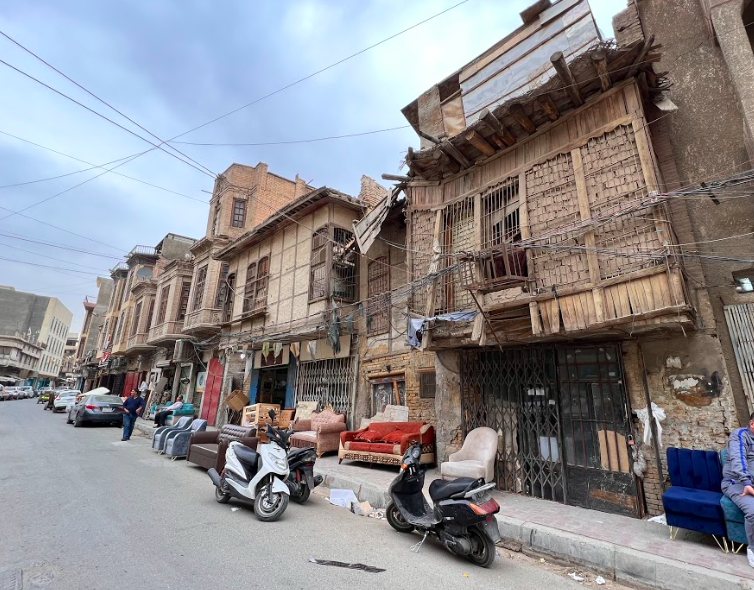
From there, we will visit a historic area of the city, famous for its Shanashel heritage houses, with their unique wooden balconies, stained glass windows and large courtyards. Many of these are in poor condition but restorations work is underway and we will hopefully be able to step inside one which is being restored for public access. We will also take tea in a lovely al-Hassoon Museum teahouse which the owner has made into a little museum formed of his personal collection of vintage Iraqi items.
We will then stroll through the Souq al-Ashar, which offers a vibrant glimpse into Basra's rich culture, with its lively stalls filled with spices and fresh produce.
After that, we will visit the Imam Ali mosque (Al-Khutwa), the second mosque built in the Islamic world, constructed in the year 14 AH, offering our first glimpse into Iraq’s Islamic history.
Later, we will stroll along the corniche beside the river and (if accessible) visit Saddam Hussein’s former personal yacht. Then, we will take a short boat trip along the Shatt al-Arab River which flows through Basra, to see Saddam’s former palaces from a different perspective as well as Basra’s striking bridge, stretching across the width of the river, before finding a nice restaurant for supper.
OVERNIGHT BASRA (ATLAS HOTEL)
DAY 2 | BASRA – MARSHES – NASIRYAH
We will start our day at with a visit to Al-Qurnah to see the Tree of Adam, believed by local people to have grown where Prophet Adam descended to earth, and where Prophet Abraham is thought to have prayed. While this belief is not rooted in Islamic tradition, it is a respected site amongst locals and foreign visitors alike.
Nearby is Al-Multaqa, where the Tigrisand Euphratesrivers converge to form the Shattal-Arab river.
Then, we will head to the Marshes of southern Iraq, the largest wetlands in the Middle East and now part of an expansive UNESCO World Heritage Site. These marshes provide a habitat for many unique bird and fish species and are home to thousands of Marsh Arabs, who have lived a traditional way of life here since Sumerian times. The Marsh Arabs continue to return to their historical homeland after the marshes - infamously drained by Saddam in the 1990s - started being re-flooded after 2003.
We will pause here to rest, enjoy traditional tea and meet some local people, before taking a boat trip through the maze of the marshes on a traditional boat called a “Shakhtura,” a unique and beautiful experience.
For lunch, we will enjoy Masgouf, a famous dish of fish slow-grilled using reeds instead of wood, inside a traditional reed house known as “Al-Mutheef”.
OVERNIGHT NASIRYAH (SUMARION HOTEL)
DAY 3 | NASIRYAH – UR
After breakfast, we will start the day by visiting Larsa, one of the most important ancient city- states of southern Mesopotamia during the early second millennium BCE. The city rose to prominence during the Isin–Larsa period and became a major political rival to Isin before eventually being conquered by Hammurabi of Babylon. Larsa was especially renowned for its great temple of Shamash, the sun god and deity of justice. Today, we can explore the remains of its ziggurat, temple complexes, offering insight into its former political and religious significance.
Next, we will visit the archaeological site of Eridu, known as the world’s first city, which was not only a thriving urban center but also a scared city. Although scarcely excavated and rarely visited, here we can literally walk amongst fragments of Sumerian history.
After that, we will visit the Ziggurat of Ur, one of the most distinctive architectural features of the ancient Mesopotamians and one of the best-preserved examples of these ancient four-sided ziggurats in Iraq. Ur is also where many of the most beautiful treasures of Mesopotamia were discovered, buried in the royal tombs. The reputed birthplace of the Prophet Abraham also lies within the ziggurat complex, although currently inaccessible to visitors.
If of interest, we can also visit the New Tourist City of Ur, a nearby modern site which has been under construction following the historic visit of Pope Francis to Iraq in 2021. It has some interesting architectural monuments, including a new church, and an Italian-style open-air theater, as well as a restaurant.
We will have supper in Nasiriyah somewhere local, unless there is a preference to dine at the restaurant in the New Tourist City of Ur.
OVERNIGHT NASIRYAH (SUMARION HOTEL)
DAY 4 | NAJAF
After breakfast, we will drive towards Samawah, to visit the amazing ruins of Uruk (“Al Warka”), often referred to as one of the world’s first cities and famous for its association with Gilgamesh and also for being where the world’s first writing was invented. This is an expansive and fascinating site in the middle of the desert, where we usually spend several hours.
From Uruk we will drive to the holy city of Najaf, we will visit Imam Ali Holy Shrine which contains the tomb of Ali ibn Abi Talib, the cousin and son-in-law of the Prophet Muhammad. Shia Muslims consider Ali as their first Imam, while Sunni Muslims regard him as the fourth Sunni Rashid Caliph.
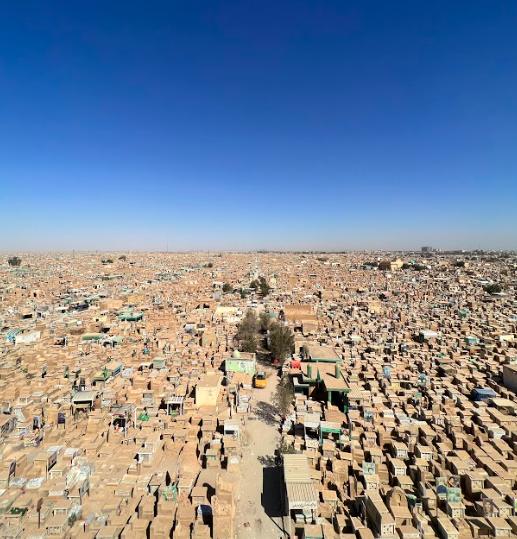
Then we will visit the world’s largest graveyard - Wadi al-Salaam - containing nearly six million graves and currently included on the Tentative UNESCO World Heritage sites.
Then, we will visit the Great Mosque of Kufa - the site of Imam Ali’s martyrdom and the resting place for several of his companions - and learn more about the origins of Shia Islam.
We will also visit the remains of the House of Imam Ali and the Al-Hannana Mosque
After that, we will visit the 2,600 year-old tomb of the Prophet Ezekiel - another prophet revered by Jews and Muslims alike - which is now inside a 400 year-old mosque complex. The Hebrew and Arabic inscriptions therein are a reminder of the historic religious diversity of Iraq.
OVERNIGHT NAJAF (JAR AL AMIR HOTEL)
DAY 5 | KARBALA
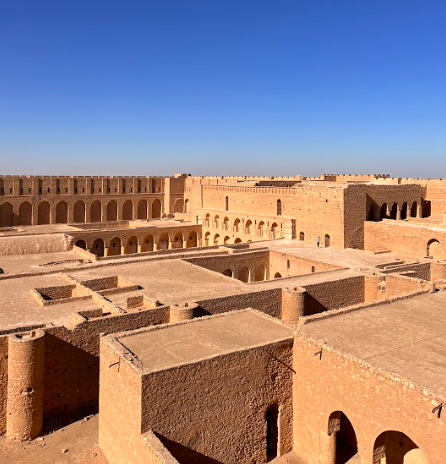
From Najaf, we will head towards Karbala, another holy city for Shia Muslims, with the possibility of visiting some additional sites near Karbala (if you are of interest), such as the mysterious al-Ukaidir fortress and the ruins of the ancient, windswept al-Aqiser church, hidden in the desert.
Once we reach Karbala itself, we will visit the Imam Abbas shrine, which contains the tomb of one of the greatest Islamic and historical characters, and where we will witness fascinating rituals and traditions. Opposite this, in the shrine complex, is the Imam Hussein shrine which contains the tomb of the second son of Imam Ali and grandson of the Prophet Muhammad.
There will also be time to explore the bustling adjacent markets before we choose a restaurant for our supper.
If accessible, we can try to arrange seeing these rarely-visited, naturally-formed Al-Tar caves, where ancient burials and artifacts have been discovered and which now provides a unique habitat to flora and fauna.
Then, we will visit one of Iraq’s manmade lakes. Razzaza Lake, a formerly huge expanse of water, now steadily shrinking due to drought, upstream dams and pressures on local water resources. We will return to Karbala for supper and rest.
OVERNIGHT KARBALA (AWLAD AL HASAN HOTEL)
DAY 6 | BABYLON
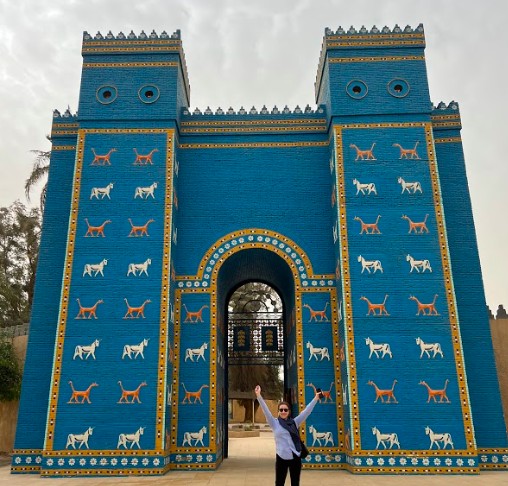
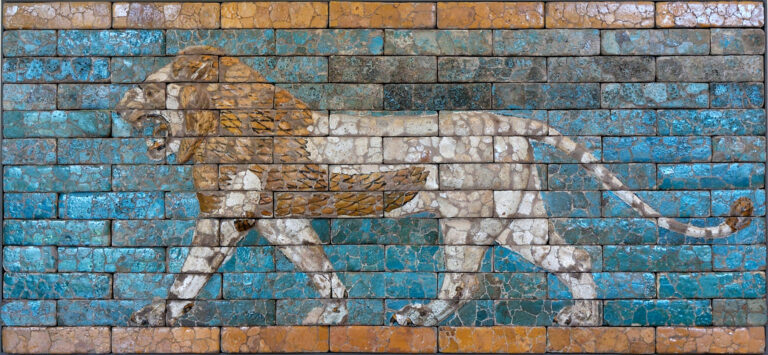
We will start our day by driving to Babylon, where we will explore this fascinating and expansive site, including the remains of the Ishtar Gate, the reputed place of Alexander the Great’s death and the wonderful Lion of Babylon statue. This is also the reputed site of the Hanging Gardens of Babylon, one of the Seven Wonders of the Ancient World.
Then, if it is accessible to visitors on that day, we will visit Saddam’s Palace, a modern palace (inspired by the former palace of King Nebuchadnezzar) on a steep manmade hill overlooking the site of ancient Babylon, which still features images of the Iraqi strongman leader.
After that we will head to Kish, to explore the archaeological remnants of this once important 5,000-year-old city, much of which today lies buried under the desert sands.
Then, we will visit Ctesiphon. Although closed for renovations, gazing at one of the world’s largest single-span brick arches, over the wall, is glimpse into the past magnificent of Iranian empires.
From there we will drive to Baghdad and check in to our hotel.
OVERNIGHT IN BAGHDAD (NOORLAND HOTEL)
DAY 7 | BAGHDAD
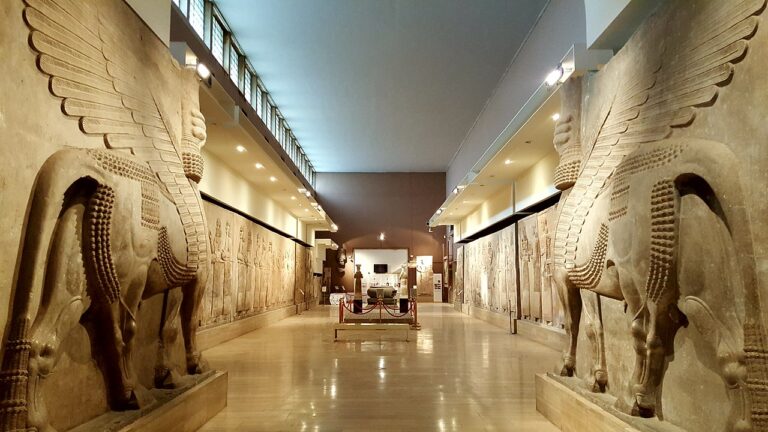
After breakfast, we will visit the fantastic Iraqi National Museum, if it is open, as it has been closed for refurbishment throughout the winter. Home to one of the world’s most important collections of Mesopotamian antiquities, including Sumerian, Akkadian, Babylonian, and Assyrian civilizations, there is much to see, and visitors normally enjoy spending several hours here.
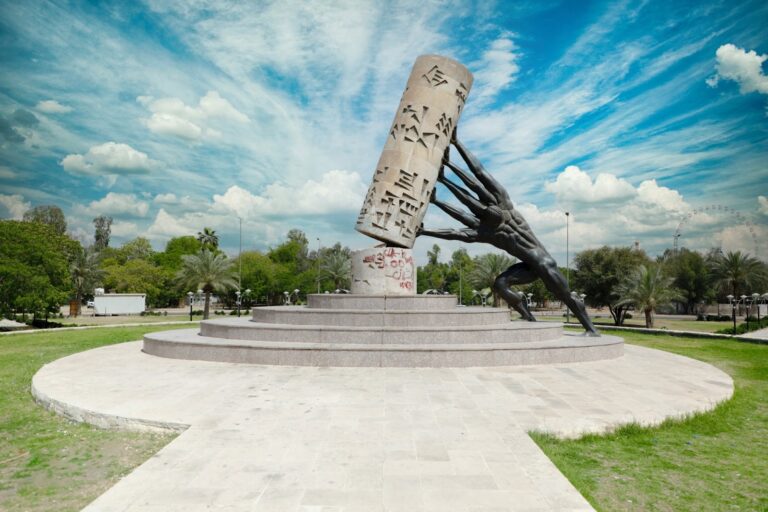
Then, we will visit the Martyrs Monument, which was dedicated to Iraqi soldiers who died in 1980’s Iraq-Iran war, although Iraqis today generally consider it a commemoration of all Iraqi martyrs from recent wars.
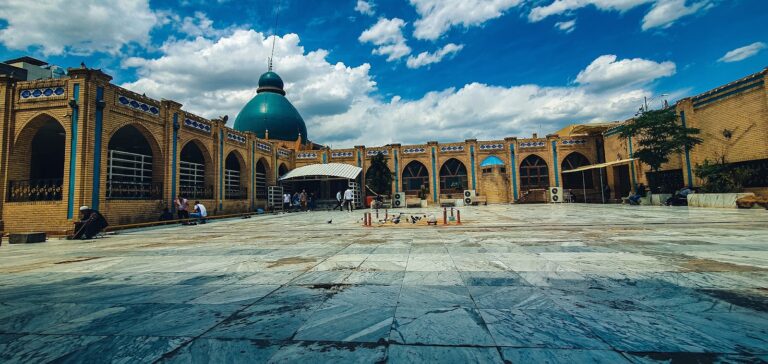
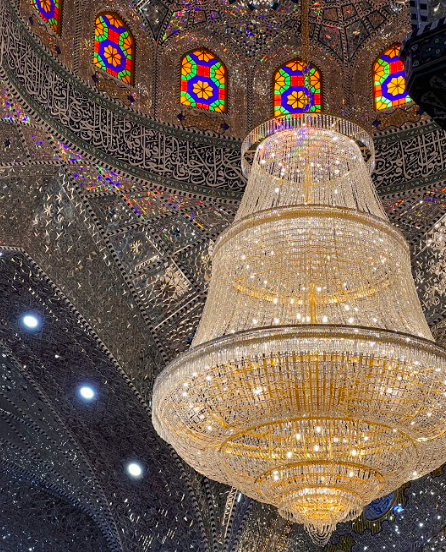
Next, we will visit Al-Kadhimiya, an important neighborhood in Baghdad which, at its center, has the bustling night market and the Al Kadhimiya Holy Shrine. This beautiful mosque and shrine complex contains the tomb of Imam Musa al-Kadhim - the seventh Shia Imam - and that of his grandson, Imam Muhammad al-Jawad.
If of interest, we can also arrange a visit to one of Baghdad’s smallest churches, located in the Kadhimiya district of the city, where you can have tea with the custodian and ask any questions you may have about what it is like to be a Christian in Iraq.
After that, we will visit Liberation Square, which is one of Baghdad’s main squares which continues to play an important role in protests, marches, uprisings and revolutions, and drive past Baghdad’s superb Central Railway Station, which is beautifully illuminated at night.
OVERNIGHT IN BAGHDAD (NOORLAND HOTEL)
DAY 8 | SAMMARA – MOSUL
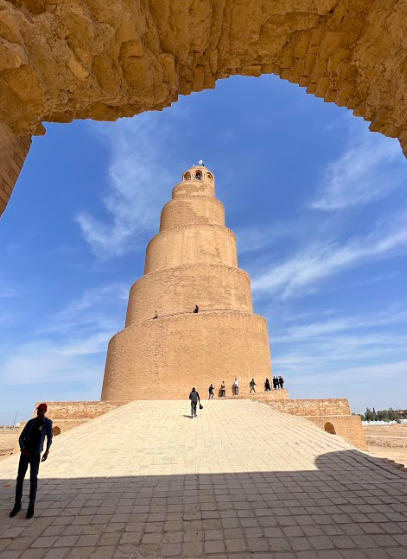
After an early breakfast at the hotel, we will set off for a long drive day toward Samarra, where we will see the Samarra Spiral Minaret, one of Iraq’s most distinctive landmarks because of its unique ascending spiral conical design. As this is currently closed for maintenance, we take photos from outside and then head into the desert to visit the slightly smaller Spiral Minaret of Abu Dalaf which is absolutely stunning. We often have this remora site to ourselves and, if you wish, you can ascend the spiral minaret.
On our way to Mosul, we will have a short stop in Tikrit, where we can show you place where Saddam Hussain was captured and we will drive through Tikrit town center - where Saddam invested greatly (as the closest town to the village of his birth), including in palaces for himself (none currently accessible). There will also the option to visit the site of the 2014 Camp Speicher massacre, a shocking and bloody act of terrorism where 1,700 Shia Muslim cadets were slaughtered by ISIS. There are memorials and depictions of the tragic occurrence.
We will then visit the archaeological site of Ashur which was once the capital of the powerful Assyrian Empire. The ruins of the city feature ancient temples, palaces and a well-preserved ziggurat, offering visitors a glimpse into the grandeur of one of the world's earliest civilizations.
OVERNIGHT IN MOSUL (AL BAROON HOTEL)
DAY 9 | MOSUL
After a good breakfast, we will start our day with a walking tour of the Old City of Mosul. This famous and beautiful historical part of the city was occupied by the Islamic State for two years and was one of the militants’ last strongholds and the scene of some of the fiercest urban battles of the 21st century. Since Mosul’s liberation, extensive building projects have been underway to restore the ancient buildings situated along the edges of quaint alleyways.
We will visit the Great Mosque of al-Nuri, and see the restored pulpit where the self- proclaimed Caliph of the Islamic State Abu Bakr al-Baghdadi, declared the establishment of ISIS, in a rare public appearance. The distinctive adjacent leaning minaret of which has long been a symbol of Mosul was destroyed during the battle against ISIS, but has been painstakingly rebuilt.
After wandering through the souk and sampling more of Mosul’s famous dishes for lunch, we will head out of the city to explore northern Iraq’s Christian heritage, visiting the ancient Rabban Hormizd Monastery in Al-Qosh. Carved into the mountainside, this 7th-century monastery offers a fascinating glimpse into ancient Christian history and its world of monks and hermits.
Then we will drive to Baghdad. In our way, we will stop to explore Hatra - the first Arab Kingdom, where this impressive archaeological site rises from the desert. While spotting Saddam Hussein’s initials on the new bricks that formed part of his rebuilding project, we will also learn about the recent history of the site, which was occupied by the Islamic State for two years and used as a training ground for child soldiers.
OVERNIGHT IN BAGHDAD (NOORLAND HOTEL)
DAY 10 | BAGHDAD
For our final day, we will start our day with a short boat trip across the River Tigris, alighting at the end of the capital’s famous Mutanabbi Street. This is considered the oldest cultural market for the people of Baghdad, and is especially famous for being the city’s main book-buying district. It is also a brilliant place for finding souvenirs.
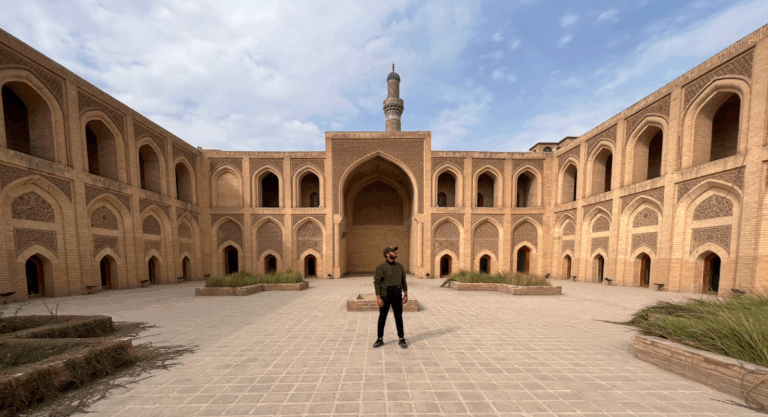
Next, we will visit the Ottoman-era Al-Qishla in the Al-Muwaffaqia School, before stepping back further in time when we visit the Al-Mustansiriya School, the impressive well-preserved Abbasid-era remains of an ancient school.
Continuing our explorations of historic Baghdad, we will stroll through the old bazaar and see traditional craftsmanship in the Copper Market.
We will take some time out to sip traditional Iraqi tea or a local specialty dried lime tea in the historic Al-Shabander cafe, one of Baghdad’s oldest and most famous cafes, and perhaps take lunch in a nearby restored heritage house.
Back in Baghdad in the evening, we will stop by the famous modern statue of Shahryar and Scheherazade, representing the famous story of One Thousand and One Nights, before heading to a nearby local restaurant for supper. Often, visitors like to choose a traditional slow- cooked Masgouf (fish) supper or other local cuisine in a heritage house converted into a unique restaurant.
Then, we will prepare for our departure from Baghdad International Airport.
PRICES: 4-star hotels
| SERVICES | PRICE PER PAX |
| 10-DAY TOUR PACKAGE | USD 2,500 |
| SINGLE SUPPLEMENT | USD 500 |
INCLUDED:
- Private transport for the duration of the tour in a comfortable modern vehicle.
- Airport transfers at the start and end of the trip.
- Accommodation in 4-star hotels, all including breakfast.
- Guide: Full-time
- Driver for the duration of the trip.
- Cultural immersion - authentic experiences and interactions with local people and communities.
- Visa fees.
- Logistics: Airport transfers, bottled water, snacks and abayas (full-length garments which women must wear when entering Islamic holy sites in Iraq).
- Entrance fees to all sites (these are $20 per person, per site)
- Boat trips in the marshes and in Basra.
- Iraq Tours team fees (accommodation and food for the driver and guide)
NOT INCLUDED:
- International flights to and from Iraq.
- Lunch and dinner each day.
- Optional tips for the guide and driver.
“We visited Iraq in August despite reservations based on news in the US. Our experience was entirely contrary to what was portrayed in the West. We were there for four days and it was entirely peaceful with no signs of conflict whatsoever. Ahmet organized our hotels and itinerary based on what we had requested. We wanted to travel for ziaret to the religious sites but also see other historical sites to mix it up. Hayder was our guide and Ali was our driver - we couldn't have asked for more helpful, friendly,respectful pair. Our kids felt immediately comfortable around them and they made an effort to cater to all of our needs. We were able to see Karbala, Najaf, Kufa, Samarra, Baghdad, and Babylonin four days. We even stopped in Fallujah for dinner! The food there is incredible and Hayder and Ali were sure they took us to the best places with lots of variety. We were welcomed everywhere we went as the Iraqis are warm, inviting folk. A trip to Iraq is highly recommended with this team!”